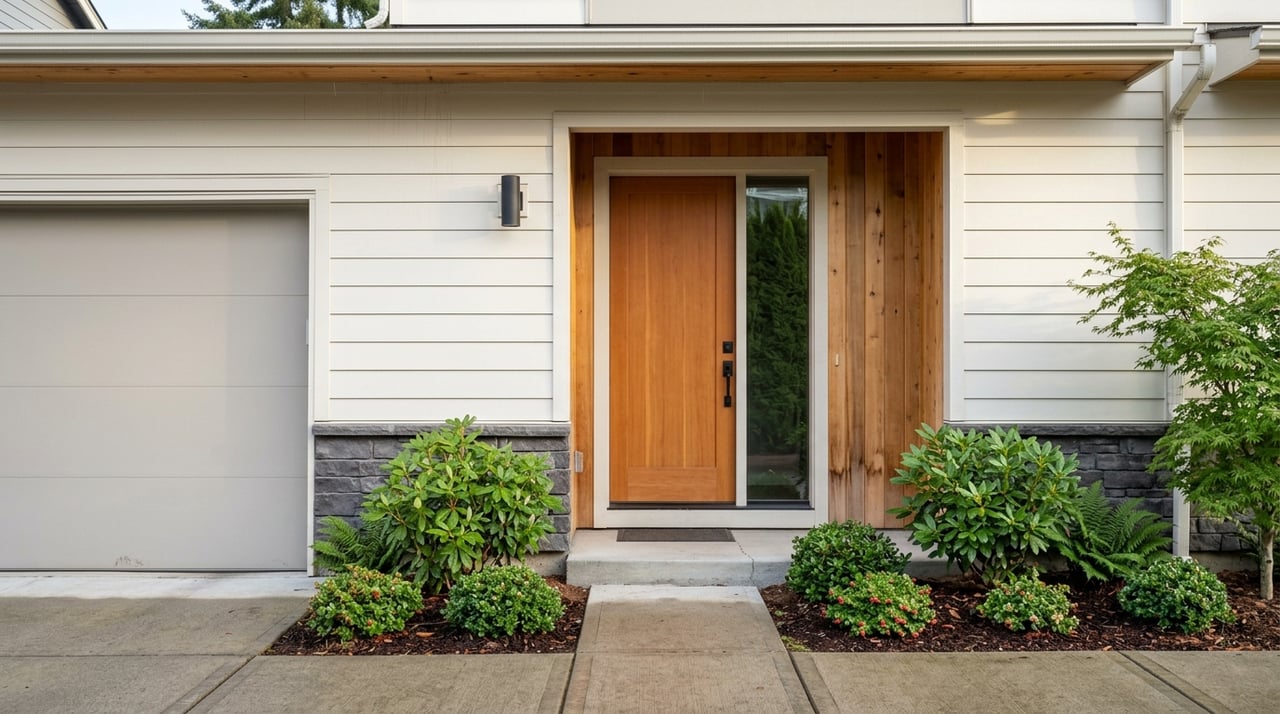
If you are deciding between a condo and a townhome in Lynnwood, you are not just choosing a floor plan. You are also choosing a budget, a maintenance setup, and a set of community rules that can shape your day-to-day life. In a fast-moving local market, that choice deserves a closer look so you can weigh price, space, flexibility, and long-term costs with confidence. Let’s dive in.
Lynnwood market snapshot
Lynnwood gives you real attached-home options at different price points. Current Redfin data shows 58 condos for sale with a median listing price of $262,000 and 93 townhouses for sale with a median listing price of $560,000.
That matters in a city where the median sale price across all home types is $720,000, and homes are selling in about 10.5 days. For many buyers, condos and townhomes can offer a more accessible path into Lynnwood than a detached house.
The local setting is changing, too. Sound Transit says the Lynnwood Link Extension opened on August 30, 2024, adding Lynnwood City Center Station to the 1 Line, while the City of Lynnwood describes City Center as a mixed-use area planned for more housing, parks, retail, and pedestrian-friendly connections.
For you, that can make attached housing especially appealing if you want commute flexibility or like the idea of living near an area that is continuing to evolve. In current search results, attached-home listings also appear in areas such as Edmonds Comm College, Picnic Point-North Lynnwood, Perrinville, Seaview, and Olympic View.
Price is only the starting point
If your first goal is affordability, condos usually win on sticker price in Lynnwood. Based on current listings, the median condo list price is well below the median townhome list price.
Still, the lower purchase price does not always mean the lower monthly cost. One current condo listing is priced at $335,000 with $559 per month in HOA dues, while a current townhome listing is priced at $429,000 with $450 per month in HOA dues.
That is why it helps to compare the full monthly picture, not just the list price. Before you decide, look at these costs together:
- Purchase price
- Monthly HOA dues
- Insurance setup for your unit
- Any known special assessments
- Expected maintenance costs that fall on you directly
Townhomes often offer more space
For many buyers, space is the biggest reason to lean toward a townhome. Current Lynnwood examples show condos ranging from 834 to 1,063 square feet, while townhome examples include units of 1,188 and 1,884 square feet.
That does not mean every townhome is larger or every condo is small. It does mean townhomes often feel more like a traditional house, especially if you want extra bedrooms, more separation between living areas, or a little more room to grow.
If your priority is maximizing square footage for your budget, townhomes may deserve a closer look. If your priority is a lower entry price and a simpler footprint, a condo may fit better.
The label may not tell the whole story
In Washington, the legal ownership structure matters more than how the property looks from the street. A home that is marketed as a townhome may still be legally classified as a condominium.
That is not just a technical detail. It affects what you own, what the association maintains, how insurance works, and which documents you need to review closely.
There is a current Lynnwood example that shows why this matters. A Redfin listing at 15721 44th Ave W Unit B3 is marketed as a townhome, but the public record metadata identifies the property subtype as condominium.
So if you are comparing a condo versus a townhome, do not rely on the marketing label alone. The declaration, map, bylaws, rules, and resale certificate usually tell you far more than the exterior style.
Why HOA governance matters
Washington common-interest communities now operate under the WUCIOA framework for communities created on or after July 1, 2018, and the law notes that older condo and HOA chapters are scheduled for repeal effective January 1, 2028. For buyers, the practical takeaway is simple: community governance is a major part of what you are buying.
Under WUCIOA, an association must organize a board, adopt budgets, maintain association funds, prepare financial statements, and regulate the use and maintenance of common elements. That means the community’s management practices can affect your costs and ownership experience in a very real way.
If you are choosing between two homes that seem similar on paper, the stronger association may be the better long-term fit. Good due diligence can help you spot that difference before you commit.
Maintenance responsibilities can differ
One of the most common buyer questions is who handles the roof, siding, landscaping, and shared areas. Under WUCIOA, the association generally maintains, repairs, and replaces common elements, including limited common elements, while each owner generally handles their own unit unless the declaration says otherwise.
That sounds straightforward, but project documents can shift responsibilities. In one community, exterior maintenance may be handled broadly by the association. In another, owners may take on more direct responsibility than they expected.
This is one reason a townhome does not automatically mean more owner control, and a condo does not automatically mean less owner responsibility. The governing documents are what count.
Reserve studies matter as much as finishes
A beautifully updated kitchen can catch your eye, but reserve funding can affect your budget for years. Washington law requires reserve studies to look ahead over a 30-year horizon and disclose major replacement needs, reserve balances, funding levels, projected contribution rates, and any special assessments that have already been implemented or are planned.
The budget must also disclose reserve contributions, whether the budget aligns with the reserve study, and whether there is a reserve deficiency or surplus on a per-unit basis. That gives you a much better sense of the association’s financial health.
If reserve funding is weak, the law is clear about the possible outcomes. The association may defer major maintenance, raise future contributions, borrow, or impose special assessments.
For you, that means the reserve study and current budget deserve the same attention as the unit’s finishes, layout, and location. A lower-priced home can become more expensive over time if the association is underfunded.
The resale certificate is a key document
In Lynnwood condo and townhome communities, the resale certificate can answer many of the questions buyers worry about most. Under current Washington rules, it must include current and delinquent assessments, unpaid special assessments, other fees that may be payable, reserve-study status, annual financial statements, recent financials, insurance coverage, and restrictions on renting or leasing.
The association must furnish the resale certificate within 10 days of request, and the preparation charge may not exceed $275. That document can help you see past the listing photos and understand the real obligations that come with the property.
If you are choosing between multiple attached homes, the resale certificate often helps separate the genuinely strong option from the one that only looks appealing at first glance.
Insurance and ownership structure go together
The Washington Insurance Commissioner explains that condo and townhome insurance covers your individual unit within a larger community and works alongside a master policy. That is another reason the legal structure matters.
Your insurance responsibilities may depend on what the association’s master policy covers and what your unit-level policy needs to handle. If you are comparing attached homes, ask how the property is legally classified and what the insurance setup looks like in that community.
This can affect your monthly ownership cost just as much as dues or maintenance responsibilities. It is worth reviewing early, not after you are already emotionally attached to a home.
Rental and pet flexibility varies by community
If you think you may rent the property in the future, flexibility becomes a major decision point. Washington resale certificate rules require disclosure of rental or leasing restrictions, and WUCIOA allows associations to require tenant screening when an owner leases a unit.
In other words, the answer is not “condos are stricter” or “townhomes are easier to rent.” The real answer depends on the declaration, resale certificate, and project rules.
Current Lynnwood listings show that rules vary widely. One condo listing advertises no rental cap and welcomes pets, while a current townhome listing says the HOA allows two pets with no weight restrictions.
Washington law also limits some HOA occupancy restrictions. Except for lawful short-term-rental limits and general health and safety rules, associations may not generally regulate or limit the number of unrelated persons who may occupy a unit.
If future flexibility matters to you, review these items carefully:
- Rental caps or waiting lists
- Leasing restrictions
- Tenant screening rules
- Pet limits or registration requirements
- Move-in or move-out fees
- Other use restrictions in the governing documents
How to choose the right fit
A condo may be the better fit if you want the lowest possible entry price, a smaller footprint, and a community where much of the shared maintenance is handled through the association. In Lynnwood’s current market, that lower upfront pricing is a meaningful advantage for many buyers.
A townhome may be the better fit if you want more space and a more house-like layout, and you are comfortable evaluating the association’s documents with the same care you would give the home itself. In some cases, a townhome can also offer a more favorable balance between purchase price and monthly dues than you might expect.
The smartest way to compare the two is to step back from the labels and focus on the full picture. Price, dues, reserves, maintenance obligations, insurance structure, and future-use rules all matter.
In Lynnwood, that is especially important because attached housing can offer an appealing entry point in a market that still moves quickly, while transit growth and City Center redevelopment may add to the appeal of certain locations over time. The best choice is the one that fits how you want to live now and what you need your home to do later.
If you want help sorting through condo versus townhome options in Lynnwood, including resale certificates, HOA documents, and the practical tradeoffs behind the listing language, The Corwin Group can help you evaluate the details and move forward with clarity.
FAQs
What is usually more affordable in Lynnwood: a condo or a townhome?
- Condos currently show a lower median listing price in Lynnwood, but your true monthly cost can change based on HOA dues, insurance setup, reserve health, and any special assessments.
What should Lynnwood buyers review before choosing an attached home?
- You should review the declaration, bylaws, rules, budget, reserve study, and resale certificate so you understand maintenance duties, fees, insurance structure, and community restrictions.
Can a Lynnwood townhome be legally classified as a condominium?
- Yes. A property may be marketed as a townhome while the legal property subtype is condominium, which is why recorded ownership documents matter more than the label in the listing.
Who handles exterior maintenance in a Lynnwood condo or townhome community?
- Under WUCIOA, the association generally maintains common elements and limited common elements, while the owner generally maintains the unit, unless the declaration assigns responsibilities differently.
Do Lynnwood condo and townhome communities allow rentals?
- Some do and some do not. Rental caps, leasing restrictions, and tenant-screening rules should be disclosed in the resale certificate and governing documents.
Does Lynnwood transit growth affect condo and townhome demand?
- It can. The opening of Lynnwood City Center Station and the city’s ongoing City Center redevelopment make transit access and nearby growth patterns relevant factors for many attached-home buyers.
