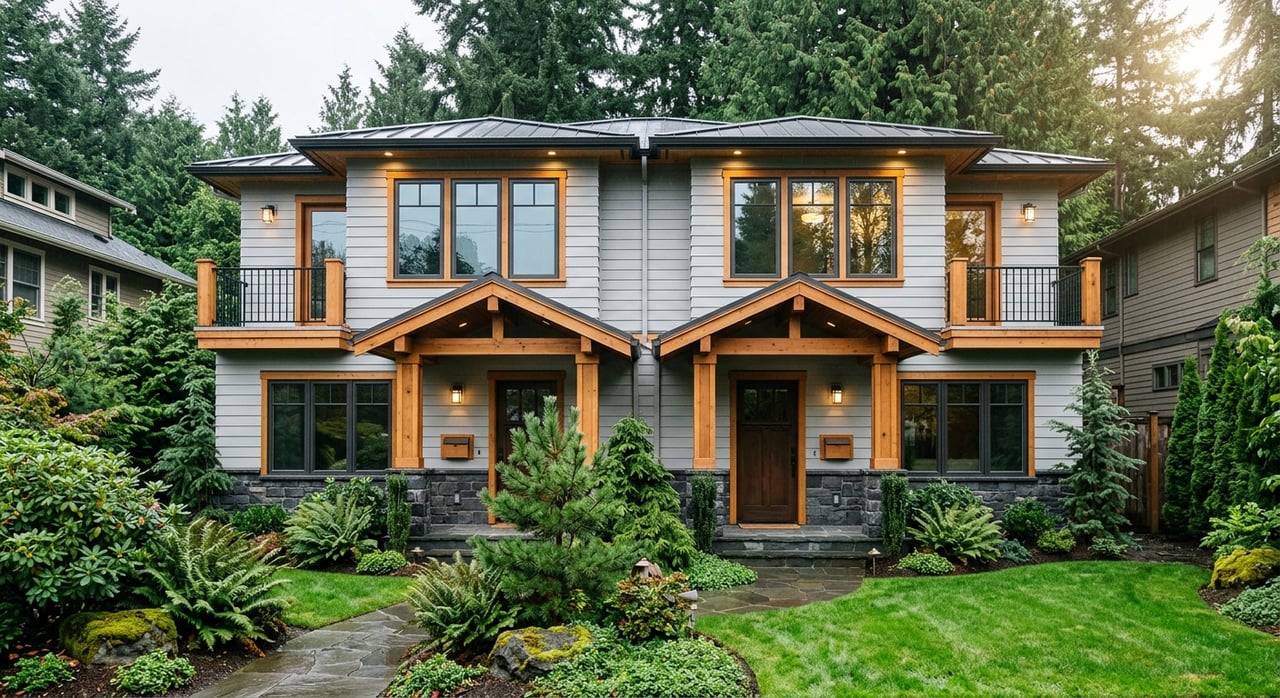
Thinking about buying a duplex, triplex, or fourplex in Everett? You are not alone. For many buyers, small multi-unit property offers a practical way to live in one unit, collect rent from the others, or buy a property with more than one income stream. If you are trying to understand how these properties work in Everett, this guide will walk you through the basics so you can evaluate options with more clarity. Let’s dive in.
Why Everett Draws Small Multi-Unit Buyers
Everett has a meaningful small multifamily market, even though it is still a smaller share of the city’s overall housing stock. The city’s housing appendix shows 2,261 units in 2-unit structures and 3,175 units in 3- or 4-unit structures, for a total of 5,436 small multifamily units. That works out to about 11.4% of Everett’s housing stock.
That matters because it means you may have real options, but you should not expect duplexes and small multi-unit properties to dominate the market. Detached single-family homes still make up the largest category. In practice, that can mean more competition when a well-located duplex or triplex comes up for sale.
Everett’s broader housing data also helps explain why these properties appeal to buyers. The city reports a median home value of $532,300, median gross rent of $1,675, and median contract rent of $1,522. With 58% of renter households and 33% of mortgaged homeowners considered cost-burdened, affordability is a real factor in this market.
For you as a buyer, that creates both opportunity and responsibility. Rental demand may support interest in small multi-unit housing, but you also need to underwrite carefully and avoid overly optimistic assumptions. Everett’s market gives reason to look closely, not casually.
What Counts as a Duplex or Small Multi-Unit
At the basic level, a duplex is a two-unit structure, while a triplex or fourplex contains three or four units. These property types often appeal to buyers who want more flexibility than a detached single-family home can offer. You may be comparing them to a traditional house, a home with an accessory unit, or a small income property.
In Everett, that comparison can get more nuanced. The city’s ADU guidance notes that Washington law defines an accessory dwelling unit as a dwelling unit on the same lot as a single-family home, duplex, triplex, townhome, or other housing unit. That means some properties may function a lot like small multifamily homes even if they started as something else.
This is one reason legal unit count matters so much. A property may have extra living space, a basement apartment, or a backyard unit, but that does not automatically mean every unit is permitted in the way you expect. Before you rely on future rental income, you need to confirm exactly what the city recognizes.
Why Legal Unit Count Matters
When you buy a duplex or small multi-unit property in Everett, one of the first due diligence steps is confirming the legal unit count and permit history. This matters for financing, valuation, insurance, and your plans for occupancy or rental income. A listing description is not enough on its own.
This review is especially important if you are looking at an older home, a converted structure, or a property with an ADU. Everett says ADU development in Neighborhood Residential, Urban Residential, and Mixed Use zones is subject to standards such as setbacks, height, and site design rules. The city also maintains historic overlay zones with design standards and neighborhood conservation guidelines.
In practical terms, you want to verify whether added kitchens, basement units, detached units, or exterior alterations were properly permitted. If a property sits in a historic overlay area or has had substantial modifications, that review becomes even more important. It is much easier to sort that out before you close than after.
How Small Multi-Unit Properties Are Valued
A duplex or fourplex is not valued exactly like a single-family home. For 2- to 4-unit properties, the appraisal process includes an income component. Freddie Mac says these properties use the Small Residential Income Property Appraisal Report, and the appraisal must analyze at least three comparable rentals with current rental information that are similar to and near the subject property.
That means the rent story matters, but it is not just about gross rent. Lenders and appraisers look at market-supported rents, existing leases when available, and the overall income picture of the property. A seller’s projected numbers may be useful as a starting point, but they are not the final word.
Expenses matter just as much. Vacancy, maintenance, repairs, taxes, insurance, and utilities can all affect the real performance of the property. If you focus only on top-line rent, you can easily overestimate what the property actually contributes to your monthly budget.
Why Everett Rent Data Matters
Everett’s housing data gives you a helpful baseline for rent expectations. The city reports a median gross rent of $1,675 and a median contract rent of $1,522. Those numbers can help you sanity-check what you see in listings and seller marketing.
Still, local affordability pressure is worth keeping in mind. With a large share of renter households already cost-burdened, it is smart to use conservative assumptions when you estimate future income. That does not mean small multi-unit properties are a poor fit. It means disciplined math matters.
Washington’s current rent increase rules also affect how you model future returns. The Washington State Department of Commerce says the maximum annual rent increase for covered residential rentals is 9.683% for 2026, unless a property is exempt under RCW 59.18.700. If you are projecting future cash flow, you should review how those rules may apply rather than assuming aggressive rent growth.
Financing Basics for Everett Buyers
Many buyers assume a duplex or triplex requires a large investor down payment. In some cases that is true, but owner-occupied financing can open more options. If you plan to live in one of the units as your primary residence, you may qualify for programs designed for 1- to 4-unit homes.
HUD says FHA-backed financing can be used for 1- to 4-unit owner-occupied principal residences, with down payments as low as 3.5%. Freddie Mac also supports 2- to 4-unit primary residences, and its Home Possible program offers down payments as low as 3%, subject to program requirements. That can make the entry point more approachable than many buyers expect.
If your down payment is under 20%, your monthly payment may also include mortgage insurance. Freddie Mac notes that private mortgage insurance is typically part of the payment until equity reaches 20%. For a house-hack or owner-occupied multi-unit purchase, it is important to model the full payment, not just principal and interest.
Can You Use Rental Income to Qualify?
Often, yes. Rental income can help support qualification, but lenders do not simply take a seller’s word for what a unit should rent for. Freddie Mac says rental income from units not occupied by the borrower can be used if it meets guide requirements.
That is why appraiser-supported market rent matters so much. The lender wants evidence that the income is realistic and documented. Existing leases, rent rolls, and comparable rental data can all play an important role.
For 3- and 4-unit properties, the standards are often tighter. HUD’s materials note that these properties are subject to a self-sufficiency test, which uses appraiser-estimated rents and expense allowances rather than gross rent alone. In plain language, the property needs to show that the income can reasonably support the property under the program’s rules.
Reserve Requirements and Cash Planning
Your down payment is not the only cash number that matters. Reserve requirements can also come into play, especially on three- and four-unit properties. HUD’s FHA FAQ preview says lenders must verify three months of PITI reserves after closing for three- to four-unit properties.
Because lenders may apply additional overlays, you should confirm reserve requirements early in the process. This can affect how much cash you want to keep available after closing. It can also shape the price range that makes sense for your search.
A strong plan includes more than just getting to the closing table. You should think through your all-in cash position, expected repairs, unit turnover costs, and early maintenance needs. Small multi-unit ownership can be rewarding, but it tends to work best when you leave yourself breathing room.
Smart Due Diligence Before You Buy
The best Everett duplex and small multifamily buyers stay grounded in documentation. Before trusting a seller’s pro forma, gather the current leases, rent roll, utility bills, tax statements, insurance quotes, and recent repair history. These are the numbers that help you understand how the property actually performs.
You also want to verify how each unit is used, whether any additions or conversions were permitted, and whether the property falls under any local design or historic overlay considerations. This step is especially important when the property has been altered over time. Small details can have a big effect on financing and future plans.
A careful review may feel slower up front, but it protects you from bigger surprises later. In Everett, where small multifamily inventory exists but is still limited, it is easy to feel pressure to move fast. The better approach is to move with purpose and verify the facts.
What This Means for Your Everett Search
Everett offers a real, but not unlimited, pool of duplexes and small multi-unit homes. The city’s housing data shows meaningful inventory in this category, while rent levels and owner-occupied financing options help explain why these properties draw attention from both house-hackers and long-term buyers. The key is understanding that the numbers need to work on paper, not just in theory.
If you are considering a duplex, triplex, or fourplex in Everett, it helps to approach the search with a clear framework. Focus on legal unit count, appraiser-supported rents, realistic expenses, financing rules, and reserve planning. That is the kind of process that can help you buy with more confidence and fewer surprises.
If you want help evaluating Everett duplexes or small multi-unit opportunities with a clear, local, numbers-first approach, The Corwin Group can help you build a smart strategy for your search.
FAQs
What is considered a small multi-unit property in Everett?
- In this context, a small multi-unit property usually means a duplex, triplex, or fourplex, though some properties with ADUs or conversions may function similarly and require careful permit review.
Can you live in one unit of an Everett duplex and rent the other?
- Yes, owner-occupied financing programs such as FHA and certain Freddie Mac options can apply if you use the property as your primary residence and meet lender requirements.
Can rental income help you qualify for an Everett multi-unit purchase?
- Yes, in many cases lenders can consider rental income from units you do not occupy, but they typically rely on appraiser-supported market rents and documentation.
Do you need 20% down to buy a duplex in Everett?
- Not always. FHA may allow as little as 3.5% down for eligible owner-occupied properties, and Freddie Mac Home Possible may allow as little as 3% down if you qualify.
What should you verify before buying an Everett triplex or fourplex?
- You should verify the legal unit count, permit history, leases, rent roll, utility costs, tax and insurance figures, repair history, and any zoning, ADU, or historic overlay issues that may affect the property.
Why do expenses matter so much when buying an Everett small multi-unit property?
- Expenses such as taxes, insurance, maintenance, repairs, utilities, and vacancy affect the property’s real income, which is a key part of valuation, financing, and long-term affordability.
